Imagine opening your computer and finding a world of information waiting for you. Maybe you want to learn how people make money from their hobbies. Maybe you’re a psychology student looking for international research papers. Or maybe you simply want to understand what is happening around the world. For people who know a widely used language such as English, the world can feel much more… broad.

But what if you only know your first language—the language you grew up speaking?
Some information may have to reach you after someone else has:
read it → understood it → translated it → explained it to you
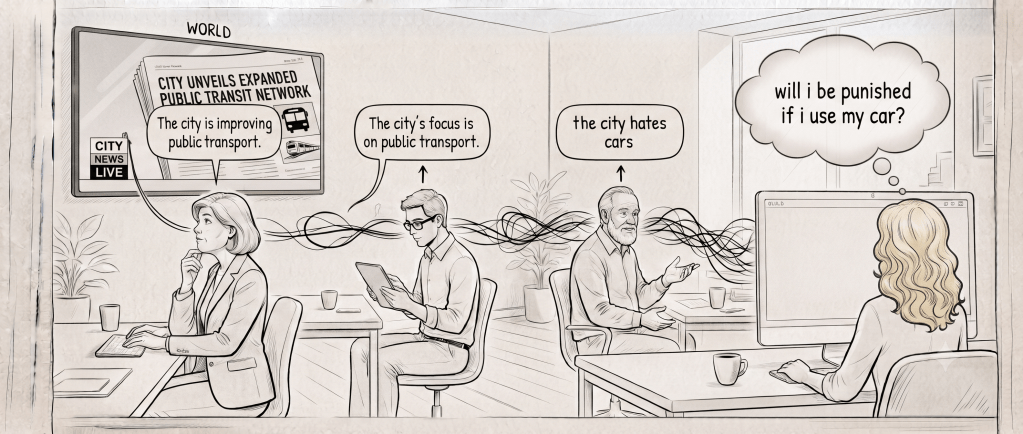
Here’s the catch: every time information passes through another person, details can change, disappear, or be understood differently.
English Gives You A much broader Option.
You can search for more information yourself, you can access resources and look for answers beyond what is available in your own language. This can be very useful or maybe even important when looking for things where high accuracy is important such as scientific evidence. Sometimes, maybe you may just need to read what people from other countries are writing. Even scientists around the world often use English to share knowledge and exchange ideas.
And more importantly, the importance of no language barrier is that you can join the discussion yourself.
But maybe you’re thinking:
“My English isn’t good enough to do my own research or talk to people about an issue.”
Here’s something important:
You Don’t Need to Understand Every Word.
Yes, even native speakers who are looking for research articles don’t always know every word. But how are we going to understand the main point? here’s how we’re gonna learn that step-by-step.
STEP #1 See the Bigger Picture
Read this short news story: (try not to reach for your dictionary, yet).
City Announces New Public Transport Plan
The city has announced a new plan to expand its public transportation system across several areas. Officials say the changes could reduce traffic congestion and air pollution by encouraging more people to use buses and trains. While many residents support the plan, others have raised concerns about its cost and how it may affect people who still depend on cars.
Don’t worry about every word you don’t know. Let’s start by finding three things:
WHO?
Who is this about? Who is the main person or group taking action in the news?
The city government / city officials.
WHAT?
What happened? What is the main event or change that the news is telling us about?
The city announced a plan to expand its public transportation system across several areas.
WHY?
Why are they doing it? What are they trying to achieve?
To reduce traffic congestion and air pollution by encouraging more people to use buses and trains.
That’s already enough to understand the main idea even if you may not understand every word, but you are already aware of what is happening. You are already enlightened and then you can check the difficult words afterwards.
step #2 Translate Only What You Need
Yes, you can use a dictionary. It’s fine to learn vocabulary if you are curious about the meaning but you do not need to manually translate the whole article, as it could take away the natural feeling of reading news.
Look up only the words that stop you from understanding the main idea. The goal is to understand enough to keep going.
Example, if you don’t know the meaning of congestion, you can guess that it is something to do with traffic as it comes after that word, or if you wanna be sure, just look it up.
step #3 Compare with other sources
Look up what other websites within the same exact search words are saying. Looking at different sources can help you build a broader understanding of an issue. One website may focus on the benefits. Another may focus on the problems. Another may include information that the first one did not mention. Reading more than one source can help you see a bigger picture and gain more perspectives.
And now you have something even more valuable than information:
You have your own understanding.
Now, Your Turn to Speak Up.
Let’s utilize what you have in your vocabulary to speak your mind.
Let’s say you see someone comment:
“The government wants everyone to stop using cars. This is a terrible idea!”
You have already read about the issue. but you have a different opinion. If you would like to add your two cents, you can say:
“From what I understand, they aren’t banning cars. They want to improve public transportation. What do you think?”
Or in a simpler english you can say:
“I think they are just trying to better the public transportation.”
Is the English advanced? maybe not necessarily. But people can understand what you mean. You chimed in. You participated in a public discussion therefore providing different perspectives on certain issues that are happening, and become more confident in using english as well. Congratulations.
What Would You Say to these?
Social Media
“Social media companies should be responsible for protecting young people from harmful content, even if it means limiting what users can see.”
How would you react to that?
What would you say?
Climate
“Developing countries should not be expected to make the same sacrifices for climate change as countries that became wealthy through decades of industrialisation.”
Maybe you would say:
“As someone from a developing country, I think our government should also be responsible, but richer countries should help us too.
Work
“As technology changes the skills companies need, university degrees may become less valuable than practical experience.”
Do you agree?
Disagree?
Or are you somewhere in between?
Your English Does Not Have to Be Perfect to Be Meaningful.
You do not have to wait until your English is perfect before you look up the latest scientific breakthrough or even just to take part in a global conversation. Use the English you have. And keep building from there. We’re all rooting for you.
 INCLUSIVE ENGLISH PROGRAM
Leave a comment