Ever joined a discussion about moving abroad? You’ve probably heard of the usual: Get a job there, Apply for a Visa, Apply for permanent residency. The path of moving abroad usually looks like this:
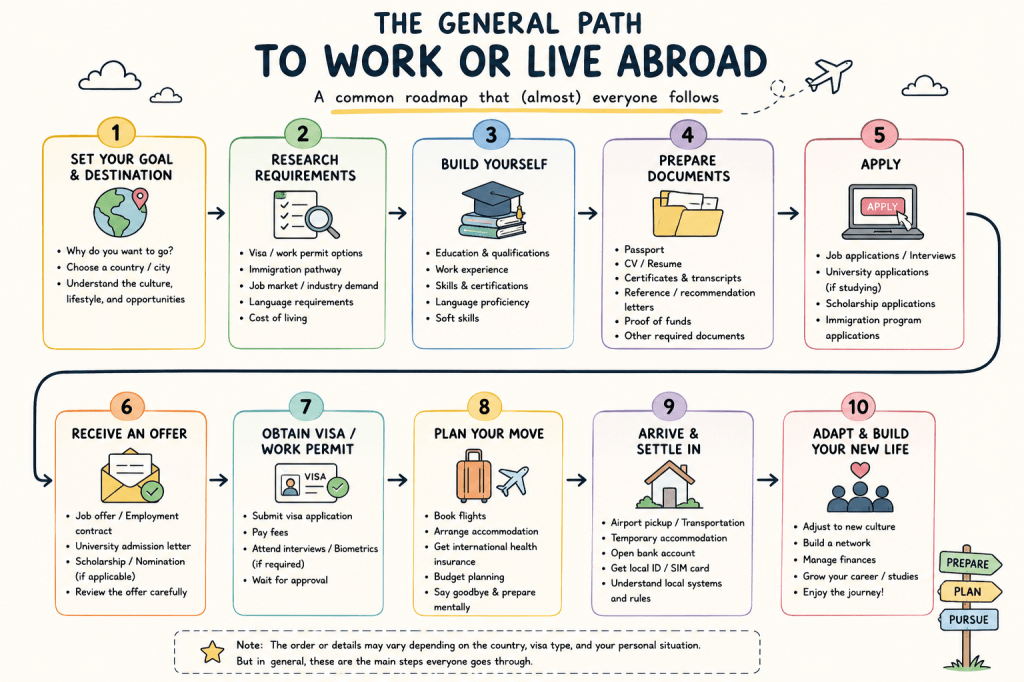
It seems like a lot, depending where you stand.
For example, imagine two people who both want to move to the Great White North. Canada itself is associated with political stability, a high quality of life, and diverse communities.
However, someone from a developing country may face additional barriers compared with someone from a developed country. From our observations, the barriers are not limited to language barriers, unfamiliarity with the country’s immigration system, or cultural adaptation, but also include:
Education systems are not identical across the world. As a result, a degree earned in one country may not automatically be recognized in another. Universities for example, may require a credential evaluation to compare your qualifications with local standards.
This is one of the reason organizations such as World Education Services (WES) exist, their job is to assess international academic credentials and determine how they compare to the education system in another country. This is common among people who aim to study abroad.
💡 Did you know? Even if two degrees have the same name, they may not always be considered equivalent in another country.
Application fees, tuition fees, even visa making fees can feel very different depending on where you live.
For someone earning an income in a high-income country, costs such as English tests, visa fees, or flights may feel like a relatively small or at least a bearable expense. For someone earning an income in a lower-income country, those same fees can require months, or even years of saving.
The amount charged is often the same, but its financial impact is not.
💡 Think about it: A £200 language test costs everyone £200, but it does not cost everyone the same proportion of their income.
Opportunities often come through people as much as through qualifications.
Living closer to major industries, international companies, or global universities can make it easier to attend conferences, meet professionals, join internships, or receive referrals. In other regions, these opportunities may be less common or require much more effort to access.
This does not mean talented people do not exist elsewhere, it just means opportunities to build international networks are not distributed equally. Meanwhile if they all move to a concentrated region, it might create an extremely competitive environment.
💡 Many jobs are filled through referrals or professional connections before they are publicly advertised.
Some professions are easier to transfer internationally than others. Certain careers require additional education, licensing, or examinations before you can legally practice in another country. Not only that, countries often prioritize occupations that are experiencing labour shortages. This means that even highly qualified professionals may find it easier or harder to relocate depending on whether their skills are currently in demand.
For example:
- Lawyers often need to study the destination country’s legal system and obtain local qualifications.
- Doctors and nurses usually need licensing exams and professional registration.
- Skilled trades and occupations facing labour shortages may have easier immigration pathways in some countries. Contrary to common jobs such as a bartender or a barista.
💡 Immigration programmes often change their priority occupations based on the country’s workforce needs.


If you have a hard time answering them, check out this grammar cheatsheet below!
What do you think are the hidden barriers to moving abroad that people rarely talk about? Share your thoughts in the comments below!
 INCLUSIVE ENGLISH PROGRAM
Leave a comment